
The Vision Behind the Goal: How Optometry Impacts World Cup Players Like Vozinha and Soccer Legends

The World Cup is a global stage where the best soccer players showcase their skills, speed, and precision. But behind every spectacular goal, save, or pass lies an often overlooked factor: vision. Clear, sharp eyesight is crucial for players to perform at their peak. This blog explores how optometry plays a vital role in the success of World Cup stars, including Cape Verde’s goalkeeper Vozinha and other famous soccer legends from around the world.
Why Vision Matters in Soccer
Soccer demands quick decision-making, precise coordination, and excellent spatial awareness. Players must track a fast-moving ball, anticipate opponents’ moves, and communicate with teammates—all while running at high speed. Good vision helps players:
Judge distances accurately
Detect subtle movements
React faster to changing situations
Maintain balance and coordination
Even a slight impairment in vision can affect a player’s performance, leading to missed opportunities or mistakes on the field.
Optometry and Soccer: The Connection
Optometry is the science of eye care, including vision testing, correction, and treatment of eye conditions. For soccer players, regular eye exams help identify issues such as:
Refractive errors (nearsightedness, farsightedness, astigmatism)
Depth perception problems
Eye muscle imbalances
Visual processing delays
Correcting these problems with glasses, contact lenses, or vision therapy can improve a player’s ability to see clearly and react quickly during matches.
Vozinha: Cape Verde’s Guardian with Sharp Vision
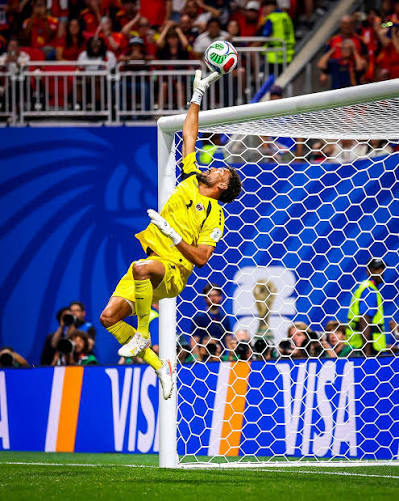
Vozinha, Cape Verde’s goalkeeper, is a standout example of how vision impacts performance. Known for his agility and quick reflexes, Vozinha relies heavily on his eyesight to anticipate shots and command his defense. Goalkeepers especially need excellent peripheral vision and depth perception to judge the ball’s trajectory and position themselves correctly.
Vozinha’s success highlights the importance of eye care in soccer. Goalkeepers often undergo specialized vision training to enhance their reaction times and tracking skills. This training can include exercises to improve focus, eye-hand coordination, and dynamic visual acuity.
Famous Soccer Players Who Benefit from Optometry
Many top soccer players have credited good vision and eye care for their success. Here are a few examples:
Lionel Messi (Argentina): Known for his incredible ball control and precision passing, Messi’s sharp vision helps him navigate tight spaces and spot teammates.
Cristiano Ronaldo (Portugal): Ronaldo’s ability to time his jumps and shots depends on excellent depth perception and focus.
Megan Rapinoe (USA): Rapinoe’s strategic playmaking benefits from clear vision and quick visual processing.
Kylian Mbappé (France): Mbappé’s speed and dribbling require fast visual reaction and spatial awareness.
These players often work with optometrists to ensure their vision is optimized for the demands of professional soccer.
How Optometry Offices Support Soccer Players
Optometry offices play a key role in supporting athletes at all levels. Services tailored for soccer players include:
Comprehensive eye exams focusing on sports vision
Prescription sports goggles or contact lenses designed for active use
Vision training programs to improve tracking, focus, and reaction time
Screening for eye injuries common in soccer, such as corneal abrasions or retinal issues
Our optometry office offers specialized care to help players maintain and improve their vision, contributing to better performance on the field.
Fun Facts About Vision and the World Cup
Studies show that soccer players with corrected vision perform better in passing accuracy and goal scoring.
Goalkeepers have some of the best peripheral vision among athletes, often exceeding 180 degrees.
Visual reaction time in soccer players can be as fast as 200 milliseconds, faster than the average person.
Some players use tinted contact lenses to reduce glare from stadium lights or sunlight during matches.
Vision training exercises can improve a player’s ability to track multiple moving objects simultaneously.
The Future of Vision Care in Soccer
Advances in optometry technology continue to enhance how players manage their vision. Digital eye exams, custom sports lenses, and virtual reality vision training are becoming more common. These tools help players like Vozinha and other World Cup stars stay sharp and competitive.
As the game evolves, so does the understanding of vision’s role in soccer. Teams increasingly include vision specialists in their support staff to give players every possible advantage.


Comments